
Our home city, on the east edge of the Tualatin Valley
Insulation Contractors in Beaverton, OR
Attic, crawl space, wall and spray foam insulation for Beaverton homes that sit through long, wet, chilly winters.
- Free on-site estimates with an attic and crawl space check
- Written, itemized quotes listing R-value, depth and square footage
- Air sealing and ventilation checked before insulation goes in
Insulation Built Around Beaverton Winters
Beaverton is where we are based, and insulation contractors in Beaverton have one job above all: keeping a house warm and dry through a winter that is more damp than cold. The city averages 39.05 inches of precipitation a year spread over 151 days with measurable rain, and December alone brings about 6.53 inches. Daily highs in December and January hover in the mid-40s, and lows sit just above freezing. That combination rewards a well-sealed attic and a dry, properly insulated crawl space far more than it rewards any single product.
Why a mild winter still costs money
A Beaverton winter rarely gets dramatic. Average snowfall is under 2 inches a year. But a furnace or heat pump that runs steadily from November through March, pushing against a thin attic or an open crawl space, adds up. Heat that leaks out the top of the house pulls cold, wet air in at the bottom. When we look at a home here, we look at both ends: how much insulation is in the attic and how well the ceiling below it is sealed, and what is going on under the floor.
Houses from the growth years
Beaverton grew fast after World War II. The census counted 2,512 residents in 1950, 5,937 in 1960 and 18,577 in 1970, and the city passed 97,000 people by 2020. A big share of the homes in neighborhoods like Denney Whitford, Highland, Vose and West Slope come from those decades and the ones that followed. Homes built to the standards of their day often have attic insulation that has settled, been disturbed by later wiring or ductwork, or simply never matched what a modern home would get. Many also sit over vented crawl spaces where the original floor insulation, if there was any, has sagged or fallen.
What we do in Beaverton homes
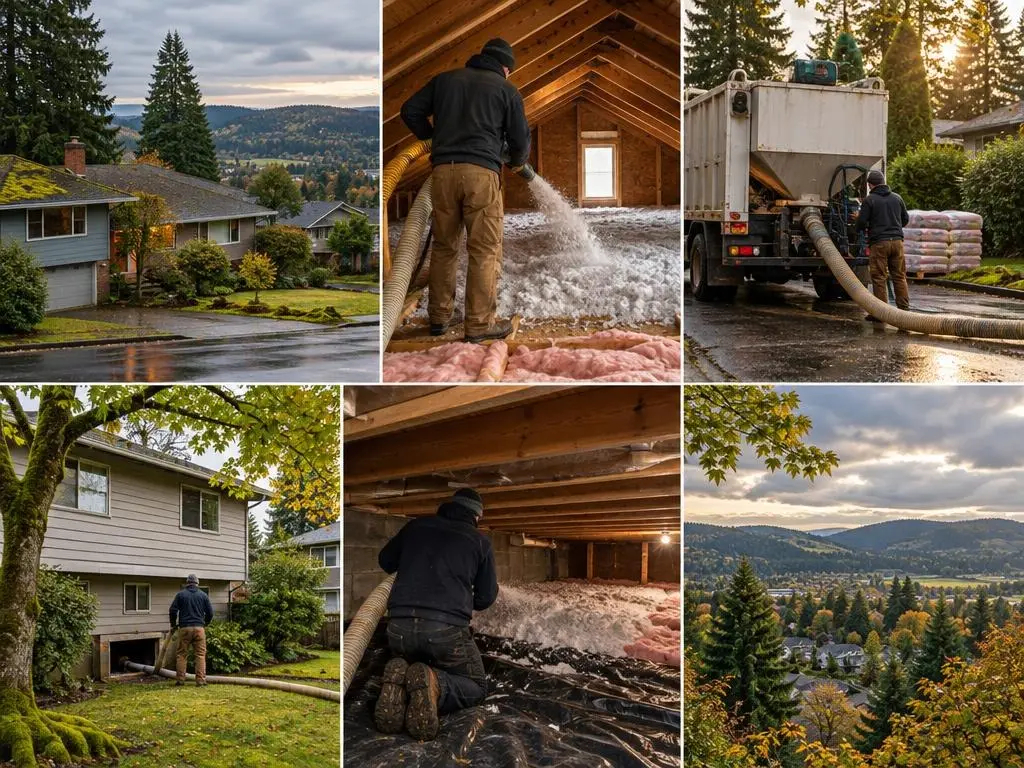
- Attic insulation: air sealing at top plates, light fixtures and the attic hatch, then bringing insulation up to a consistent depth
- Blown-in insulation: loose-fill cellulose or fiberglass for open attics and closed wall cavities
- Crawl space insulation: underfloor batts held tight to the subfloor, plus a check of the ground vapor barrier
- Spray foam insulation: for rim joists, bonus rooms, knee walls and spots where air leakage is the main problem
- Wall insulation: dense-packed into existing walls through small access holes, or installed during a remodel
- Insulation removal and replacement: clearing out wet, compressed or rodent-fouled material before new insulation goes in
The crawl space question
With that much rain, crawl spaces deserve a careful look. Water that collects under a house raises humidity, and damp underfloor insulation stops doing its job and can hold moisture against the framing. Before adding insulation under a floor, we check for standing water, a torn or missing ground cover, and blocked vents. If the crawl space needs drainage work first, we will tell you so rather than covering the problem with new batts.
Rodents and old insulation
Attics and crawl spaces in older Beaverton homes sometimes show signs of rodents: tunnels through the insulation, droppings and nesting material. Contaminated insulation should come out rather than be buried under a new layer. We remove it, clean up the space, point out likely entry points so they can be sealed with your pest control company, and then reinsulate.
Permits and city rules
The City of Beaverton Building Division issues building, plumbing, heating and cooling, and electrical permits and sits within the Community and Economic Development Department. Whether your project needs a permit depends on its scope; a straight attic top-up is different from opening walls during a remodel. We check with the city when a job calls for it. Beaverton has also adopted a Residential Property Maintenance Code aimed at protecting the health and safety of residents, which matters to landlords: about half of the city's homes are renter-occupied.
Incentives
Energy Trust of Oregon serves customers of Portland General Electric, Pacific Power, NW Natural, Cascade Natural Gas and Avista. Its offers change and depend on funding, so check its current residential programs before you sign anything. We can put the details of our work in writing so you have what you need to apply.
Free written estimates
Call (971) 458-8258 to set up a visit. We go into the attic and under the house, take photos, and give you a written quote that lists each area, the material and the depth or R-value we plan to install.
Beaverton Facts That Shape the Work
- Wet season, not deep cold. Beaverton averages 39.05 inches of precipitation a year over 151 days with measurable rain. December (6.53 in), November (5.99 in) and January (5.79 in) are the wettest months, while average snowfall is only 1.9 inches.
- Fast postwar growth. The census counted 2,512 people in 1950, 5,937 in 1960 and 18,577 in 1970. The city reached 97,494 by 2020, making it the second-most populous city in Washington County, so much of its housing dates from the growth decades.
- Half owners, half renters. Census estimates for 2020 to 2024 put Beaverton's owner-occupied rate at 50.5% and the median owner-occupied home value at $569,800. About 84.6% of residents lived in the same house a year earlier.
- Named for wet ground. The city's name comes from the settlement's location near a large body of water formed by beaver dams. The Atfalati village name, Chakeipi, means place of the beaver.
- Thirteen neighborhoods. Beaverton is divided into 13 neighborhoods, including Central Beaverton, Denney Whitford, Five Oaks, Greenway, Highland, Sexton Mountain, Vose and West Slope, most with their own Neighborhood Association Committee.
- Who issues permits. The City of Beaverton Building Division, part of the Community and Economic Development Department, issues building, plumbing, heating and cooling, and electrical permits. The city has also adopted a Residential Property Maintenance Code.
Beaverton Questions
Is attic insulation or crawl space insulation more important in Beaverton?
It depends on the house, which is why we inspect both. Heat rises and escapes through a thin or leaky attic, while a damp, uninsulated crawl space makes floors cold for months of the rainy season. In many Beaverton homes the attic gives the quickest return, but if the crawl space is wet, that has to be dealt with first.
My crawl space gets damp every winter. Can you just add insulation?
Not as a first step. Insulation in a wet crawl space can hold moisture against the floor framing. We check the ground cover, vents and any standing water, and if drainage or a new vapor barrier is needed, we say so and explain the order of work.
Do I need a city permit to insulate my Beaverton home?
It depends on the scope. The City of Beaverton Building Division handles building permits, and a simple attic top-up is not the same as insulating walls during a remodel. We confirm with the city when a project may need one and include that in the quote.
I rent out a house in Beaverton. Does insulation work affect my tenants?
Most attic and crawl space work happens without entering living areas for long. We schedule around tenants and can give you a written scope to share with them. Beaverton's Residential Property Maintenance Code is also worth reviewing as a landlord.
Free Estimates in Beaverton, OR
Free written estimates for homes anywhere in Beaverton.
Insulation Contractors Near Beaverton
- Insulation Contractors in Hillsboro, OR
- Insulation Contractors in Tigard, OR
- Insulation Contractors in Portland, OR
- Insulation Contractors in Lake Oswego, OR
- Insulation Contractors in Aloha, OR
- Insulation Contractors in Tualatin, OR
- Insulation Contractors in Sherwood, OR
- Insulation Contractors in West Linn, OR
- Insulation Contractors in Forest Grove, OR
- Insulation Contractors in Cornelius, OR
- Insulation Contractors in King City, OR
- Insulation Contractors in Bethany, OR
- Insulation Contractors in Cedar Mill, OR
- Insulation Contractors in Garden Home-Whitford, OR
- Insulation Contractors in Wilsonville, OR
- Insulation Contractors in Happy Valley, OR
- Insulation Contractors in Oregon City, OR