
Air sealing, baffles and new insulation
Attic Insulation in Beaverton, OR
Seal the leaks, keep the eaves venting, then bring the attic floor up to the R-value written on your quote.
- Free on-site estimates with an attic and crawl space check
- Written, itemized quotes listing R-value, depth and square footage
- Air sealing and ventilation checked before insulation goes in
Topping Up the Attic the Right Way
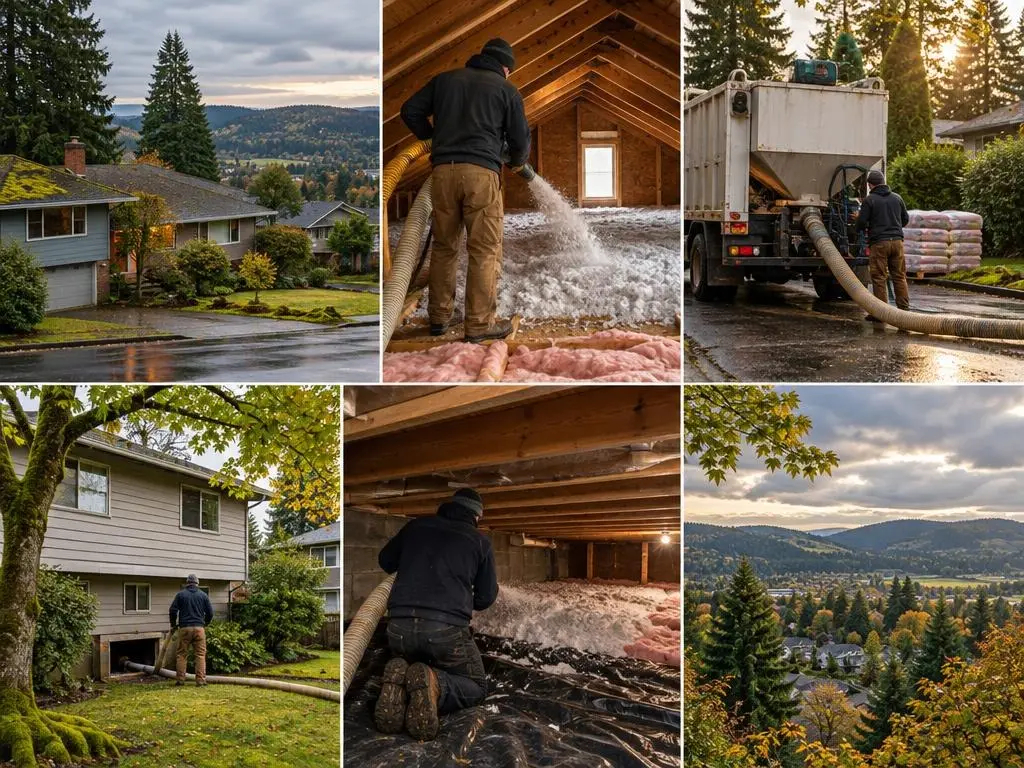
Attic insulation is where most Beaverton homes gain the most comfort for the least money. A typical house from the 1970s or 1980s started with a modest layer of fiberglass or cellulose on the attic floor, and decades of settling, storage, cable runs and the occasional rodent have left it thinner and patchier than it looks from the hatch. Adding insulation is simple in concept, but the order of the work decides whether it actually performs.
Why air sealing comes first
Insulation slows heat moving through it; it does very little to stop air moving through it. In a Beaverton winter, warm indoor air rises and pushes through every gap in the ceiling: the top plates of interior walls, holes drilled for wiring and plumbing, gaps around the chimney and flue, the attic hatch and older recessed lights. That air carries heat and moisture into the attic. We seal those openings with foam, caulk or sheet material before any new insulation goes down, because once a foot of loose-fill covers them they are very hard to reach.
Keeping the attic ventilated
Most attics around here are vented through the soffits and out at the ridge or roof vents. When insulation is blown all the way to the eaves, it can plug the soffit vents and stop that airflow, which leads to damp sheathing and, in our climate, mold on the underside of the roof. We install baffles at each rafter bay so air keeps moving from the soffits up under the roof deck, even with deep insulation on the floor. We also check that bathroom and kitchen fans are ducted to the outside rather than dumping humid air into the attic.
How much insulation to add
The current Oregon Residential Specialty Code calls for R-49 in flat ceilings in new construction. For existing homes in our marine climate zone, the Department of Energy suggests R-49 when there are already 3 to 4 inches of insulation and R-60 when the attic is bare. With blown-in fiberglass, which runs about R-2.2 to R-2.9 per inch, R-49 means roughly 17 to 22 inches of depth; cellulose, at about R-3.1 to R-3.8 per inch, gets there with less. We put the target R-value and depth on your quote and leave depth markers in the attic so you can check them.
Blown-in, batts or spray foam
- Blown-in fiberglass or cellulose: the usual choice for open attic floors; fills around framing and wiring without gaps
- Batts: practical where the joists are clear and evenly spaced, or for knee walls in finished attic spaces
- Spray foam: for sealing and insulating tight spots, vaulted ceilings with shallow rafters or attics being turned into conditioned space
Most Beaverton attics end up with air sealing plus blown-in insulation. Spray foam has its place, but on an open attic floor it usually costs more for the same R-value.
When the old insulation has to come out
Clean, dry insulation can stay in place under the new layer. It should come out if it is wet from a roof leak, soiled by rodents, moldy, or in the way of air sealing that cannot otherwise be reached. If we find vermiculite, a pebbly gray-brown or silver-gold loose-fill, we stop: the EPA says to assume it contains asbestos and not disturb it, and removal is a job for a licensed asbestos abatement contractor.
Energy Trust of Oregon
Attic insulation has been one of the measures covered by Energy Trust of Oregon incentives for customers of participating utilities, typically with a cap on how much insulation is there now and a minimum level to install. Terms change, so check Energy Trust's current offers. Your quote lists the existing and installed R-values so you have the numbers the program asks for.
What This Covers
An attic insulation job covers the ceiling plane between your living space and the roof.
Air sealing
Top plates, wiring and plumbing holes, flues and the attic hatch sealed before insulating.
Eave baffles
Rafter vents installed so soffit airflow stays open behind deep insulation.
Blown-in insulation
Fiberglass or cellulose blown to the agreed R-value with depth markers in place.
Hatch insulation and dams
An insulated, weatherstripped hatch and a dam so loose-fill stays out of the opening.
Typical Attic Insulation Costs
| Item | Published national range |
|---|---|
| Typical attic job | $1,000 to $2,700 (HomeGuide); $2,000 to $3,250 for 1,000 sq ft (Fixr) |
| Blown-in, per sq ft installed | $0.90 to $2.40 |
| Batts and rolls, per sq ft installed | $0.80 to $2.60 |
| Spray foam, per sq ft installed | $1.00 to $4.50 |
| 1,000 sq ft attic, any method | $1,000 to $4,000 |
| Old insulation removal | $1 to $2 per sq ft |
Published national ranges from HomeGuide (2026) and Fixr. Prices in the Portland area can differ, and attic size, access, air sealing and removal change the total. Your written estimate sets the price.
How It Works
1. Inspect the attic
We measure existing depth, identify the material and look for leaks, moisture, rodents and vermiculite.
2. Seal and prep
Air leaks are sealed, baffles installed, and the hatch and heat sources dammed.
3. Install
Insulation is blown or laid to the R-value on your quote, with depth markers.
4. Check with you
We show you the finished attic in person or in photos, and clean up.
Attic Insulation Questions
How much does attic insulation cost in Beaverton?
HomeGuide's 2026 figures put a typical attic job at $1,000 to $2,700, with blown-in insulation at $0.90 to $2.40 per square foot installed. A 1,000-square-foot attic can run $1,000 to $4,000 depending on method and prep. We give you a written price after seeing your attic.
What R-value should my attic be in Oregon?
New construction in Oregon needs R-49 in flat ceilings under the current residential code. For existing homes in our marine zone, the Department of Energy suggests R-49 if you already have 3 to 4 inches and R-60 if the attic is bare.
Can new insulation go on top of the old?
Yes, if the old insulation is dry, clean and not vermiculite. We air seal first, which sometimes means moving the old material aside, then add the new layer on top.
How long does attic insulation take?
Most blown-in attic jobs on a typical house take a day, including air sealing. Removal of old insulation or rodent cleanup adds time, which we note on the quote.
Will more attic insulation cause moisture problems?
Not when the attic is air sealed and stays ventilated. Problems come from warm, humid air leaking up from the house or from blocked soffit vents, which is why we seal and install baffles before insulating.
Attic Insulation Service Areas
- Insulation Contractors in Beaverton, OR
- Insulation Contractors in Hillsboro, OR
- Insulation Contractors in Tigard, OR
- Insulation Contractors in Portland, OR
- Insulation Contractors in Lake Oswego, OR
- Insulation Contractors in Aloha, OR
- Insulation Contractors in Tualatin, OR
- Insulation Contractors in Sherwood, OR
- Insulation Contractors in West Linn, OR
- Insulation Contractors in Forest Grove, OR
- Insulation Contractors in Cornelius, OR
- Insulation Contractors in King City, OR
- Insulation Contractors in Bethany, OR
- Insulation Contractors in Cedar Mill, OR
- Insulation Contractors in Garden Home-Whitford, OR
- Insulation Contractors in Wilsonville, OR
- Insulation Contractors in Happy Valley, OR
- Insulation Contractors in Oregon City, OR
Get a Attic Insulation Estimate
Free attic insulation estimates in Beaverton.